


As spring arrives, outdoor space starts to matter in a bigger way. Patios, rooftop terraces, café areas, and transitional spaces are no longer just nice extras. They are becoming real extensions of the workplace—places for connection, focus, informal meetings, and moments to reset. Haworth has been leaning into that shift, and through FMG, clients can bring that thinking to life with outdoor-focused solutions that are both high-performing and design-forward.
Why Outdoor Spaces Matter at Work
There is a practical reason this matters. Haworth points to the benefits of connecting people with nature at work, noting that daylight, views of the outdoors, and biophilic design can support happiness, cognitive function, stress reduction, and overall well-being. Haworth also cites research showing that even 20–30 minutes in nature can reduce stress-related hormone levels, and that one hour interacting with nature can improve attention span. For employers, that makes outdoor space more than a design statement – it becomes a tool for workplace experience.
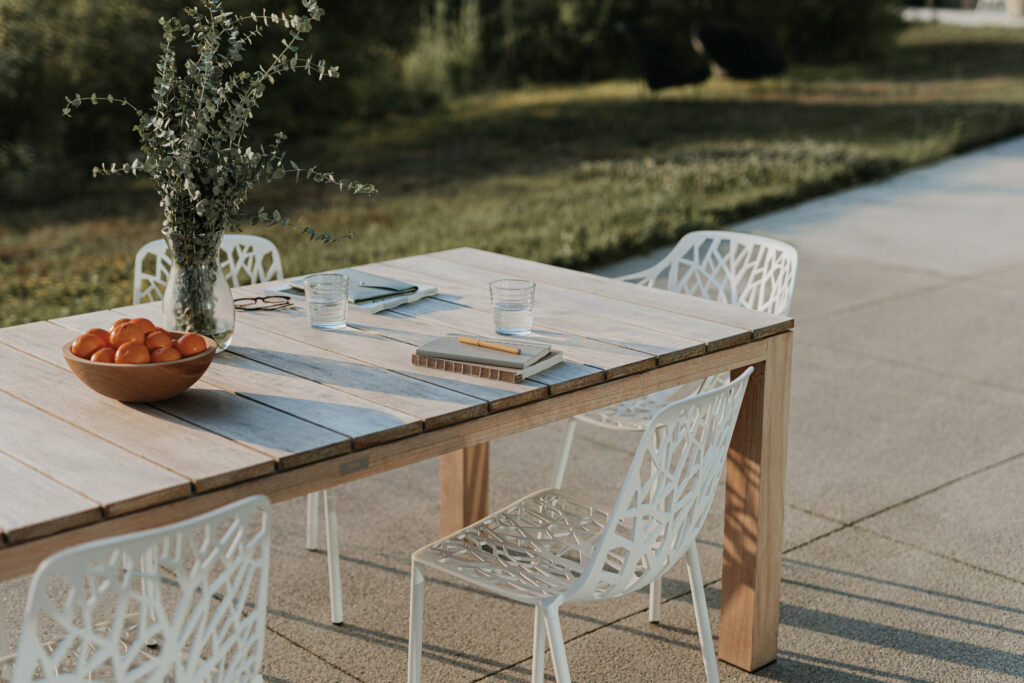
Spring is the right season to rethink these areas because people naturally want to spend more time outside, and organizations are looking for new ways to make the office more inviting. Haworth’s outdoor workplace perspective is straightforward: spaces for collaboration, socializing, restoration, and focus help create the kinds of experiences that draw people in. Outdoor environments can support lunches, coffee chats, one-on-ones, brainstorming, and phone calls just as easily as they support casual breaks.
Designing Outdoor Environments That Perform
That is where JANUS et Cie fits so well into the conversation. As part of the Haworth family of brands, JANUS et Cie focuses on design-driven furnishings for the outdoors, with a point of view centered on connection, balance, and well-being. The brand has deep roots in premium outdoor furniture, dating back to 1978, and Haworth positions it as a leader in outdoor commercial furnishings engineered for exterior use while still enhancing interior and transitional spaces.
Two pieces stand out particularly well for spring applications.
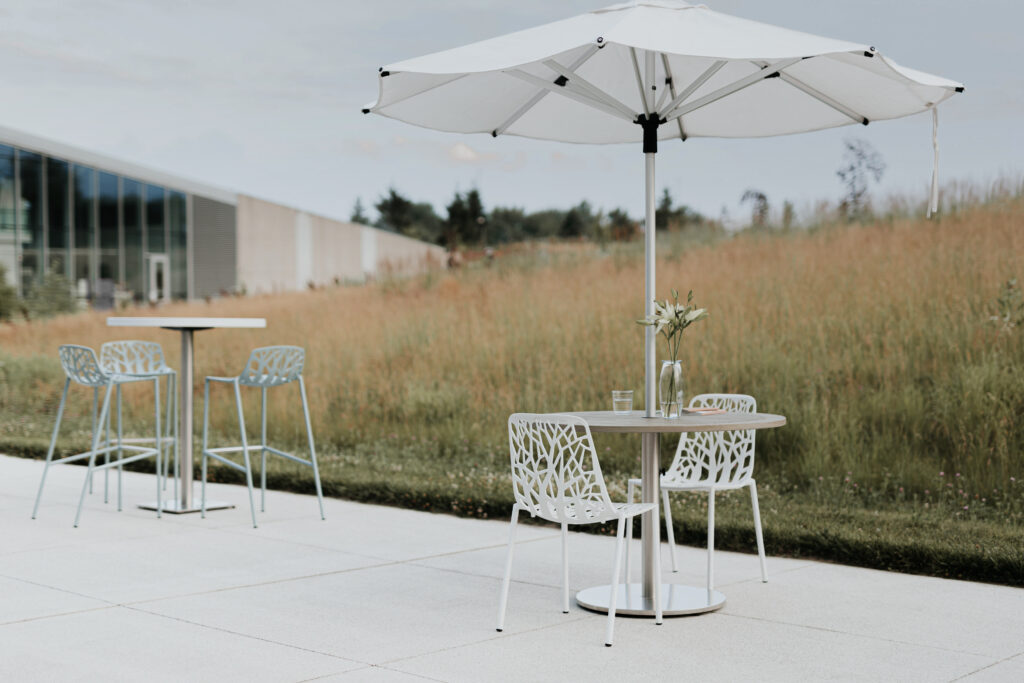
The Forest Stool is a strong option for patios, cafés, dining zones, and hospitality-inspired touchdown areas. Its organic cutout pattern is meant to evoke tree branches, so it brings a subtle biophilic expression without feeling literal or overdone. More importantly, it is built for real use: the sculptural openings allow water, air, and light to pass through, and the powder-coated die-cast aluminum construction is suitable for indoor or outdoor settings. It is the kind of piece that works hard while still adding personality.
The Matisse Sofa is a different move altogether – more lounge-oriented, more architectural, and ideal for creating layered outdoor settings that feel intentional rather than leftover. Haworth describes it as a minimal, geometric sofa system for indoor and outdoor spaces, with six modules that allow for custom configurations. Its aluminum frame, JANUScoat finish, weather-resistant cushions, and drainage-minded construction make it well suited for outdoor environments where flexibility and durability matter. For rooftop lounges, client-facing terraces, or hospitality-inspired courtyards, it gives teams a way to create an outdoor room instead of just placing furniture outside.
Haworth + JANUS et Cie: Outdoor Solutions That Work Harder
What FMG brings to this is the ability to help clients think beyond the individual product. Outdoor furniture is not just about selecting attractive pieces. It is about understanding how people will use the space, what settings need to support, and how the environment connects back to brand, culture, and employee experience. Haworth notes that outdoor commercial furniture today needs to support mobility, cleanability, and long-term performance, especially in high-use settings. That aligns directly with how FMG approaches workplace strategy: not just selling product, but shaping spaces that perform.
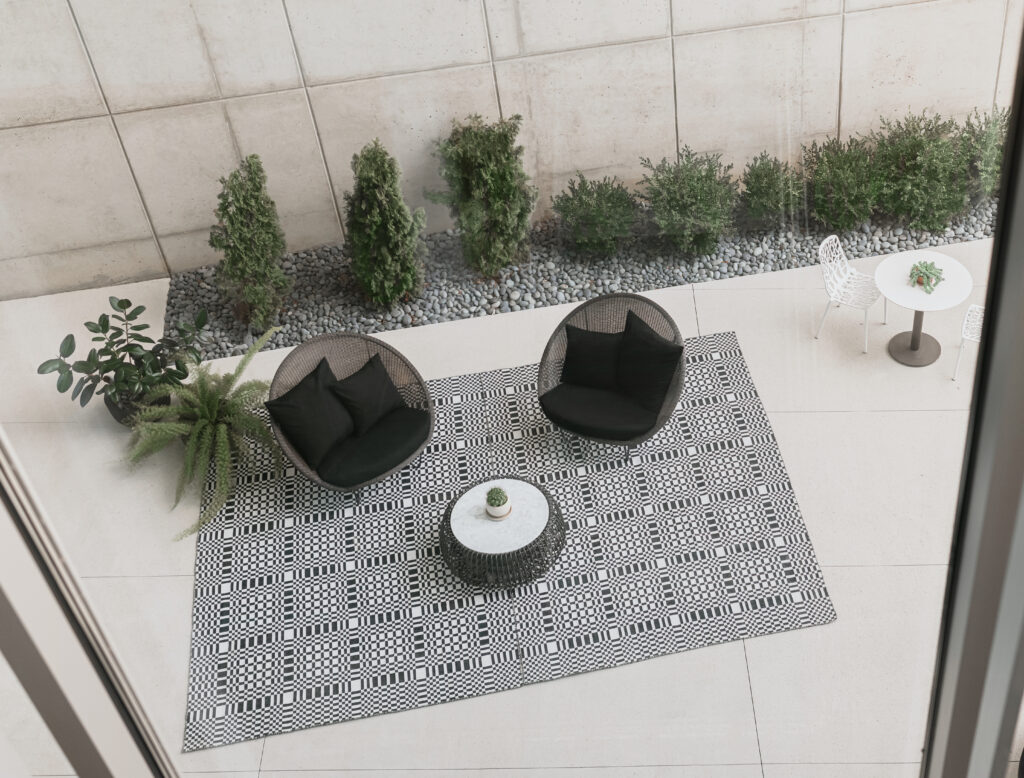
The strongest outdoor spaces tend to do three things well. They feel easy to use. They support more than one type of activity. And they look intentional enough that people actually choose them. That could mean a café zone anchored by Forest Stools, a terrace lounge built around Matisse, or a broader outdoor setting that blends social space, work space, and moments of quiet retreat. When done right, those areas can leave a strong first impression on employees, clients, and visitors alike. Haworth even notes that outdoor spaces are often among the first places an employee, client, or investor sees.
Spring is a good time to make those spaces useful again. Not just opened up, but actually designed to support how people work now.