


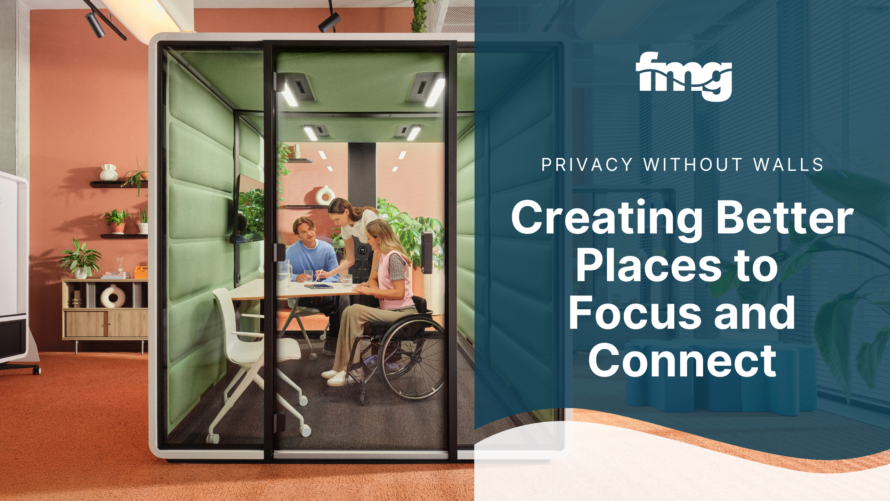
Today’s workplace is expected to support collaboration, individual focus, virtual meetings, confidential conversations, and employee well-being—often within the same floorplate.
Open environments provide flexibility and connection, but they can also create noise, visual distractions, and a shortage of private places. As The New York Times explored in “A Quiet Respite in a Bustling Open Workplace,” employees need opportunities to step away from surrounding activity without becoming disconnected from the workplace.
Through our partnership with Haworth, Furniture Marketing Group helps organizations create that balance. Haworth Hushoffice acoustic pods introduce enclosed, adaptable spaces for focused work, phone calls, virtual meetings, private conversations, and small-group collaboration.
Supporting Choice and Control
Different tasks require different environments. A setting that works well for an informal team discussion may not support a confidential call or concentrated individual work.
Hushoffice pods give people greater choice over where and how they work. Their acoustic construction reduces surrounding distractions while helping limit the speech that travels outside the pod. Users gain a quieter, more controlled environment without losing access to the energy and collaboration of the larger workplace.
That sense of control extends inside the pod. Depending on the model, the HushAssistant touchscreen allows users to regulate lighting and ventilation and manage room reservations. Integrated power and data connections support phone calls, video conferences, presentations, and focused computer work.
The Right Space for the Activity
The Hushoffice portfolio includes options for a range of workstyles and occupancy needs.
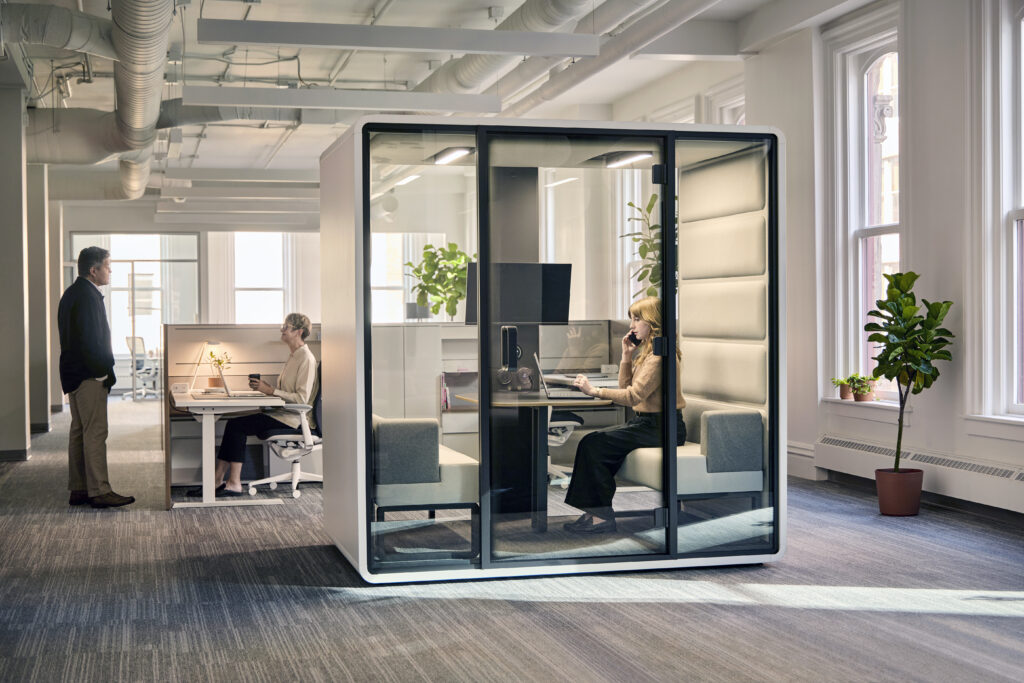
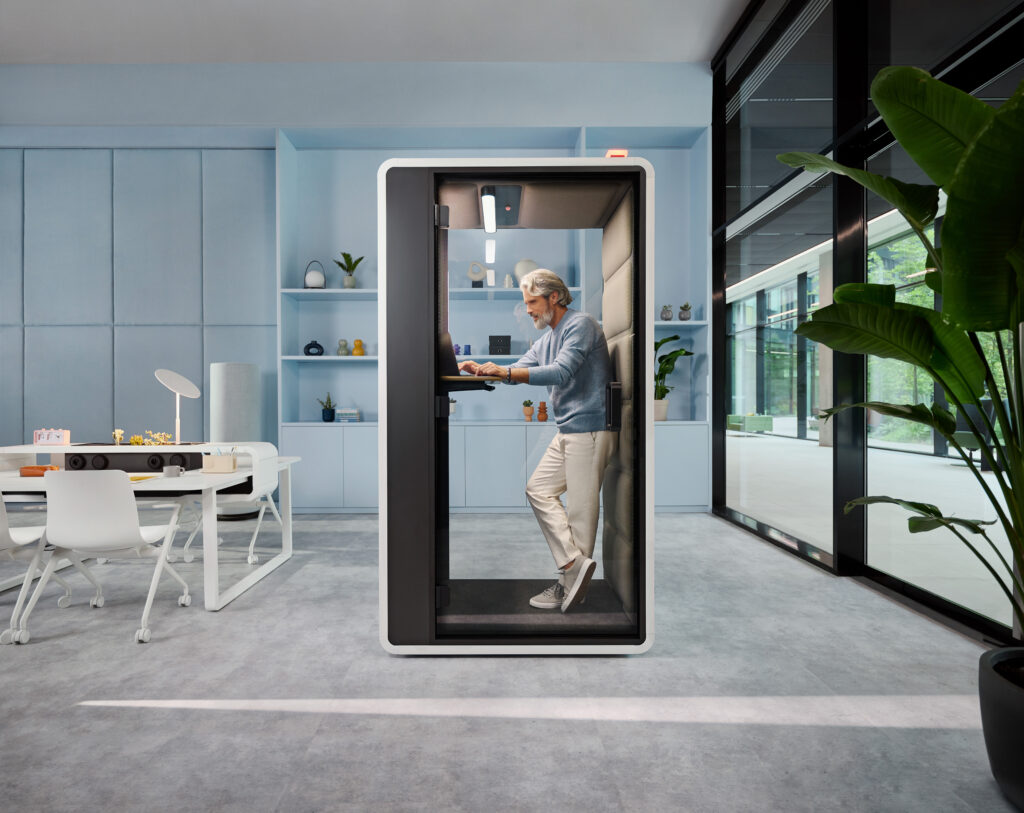
Single-user models provide compact spaces for phone calls, virtual meetings, heads-down work, and longer periods of concentration. Other models support private one-on-one conversations or small-group collaboration. Larger HushFree.L pods can accommodate up to six people and serve as conference rooms, social spaces, or quiet respite areas.
Accessible HushFree.Access models feature lower thresholds and wider entryways, expanding the number of people who can comfortably use the space.
This variety allows organizations to create a mix of settings rather than relying on one type of room for every activity.
Flexible Spaces Without Major Construction
Privacy is sometimes treated as a choice between an open office and permanent enclosed rooms. Acoustic pods offer another option.
Hushoffice pods are freestanding and equipped with integrated casters, allowing them to be repositioned as teams, departments, and workplace needs change. They can be incorporated into an existing floorplate without the disruption of traditional construction and, with careful planning, without reducing the number of individual workstations.
For organizations trying to make better use of limited space, pods can create private settings exactly where they are needed—near workstations, collaboration zones, libraries, clinical areas, student centers, or shared touchdown spaces.
Applications Beyond the Traditional Office
The need for privacy and focus is not limited to corporate workplaces.
In healthcare environments, acoustic pods can support telemedicine, confidential consultations, focused administrative work, or caregiver respite. In educational settings, they can provide places for individual study, virtual office hours, research, and group projects. Government and professional-service organizations can use them for conversations requiring greater confidentiality.
The product remains the same, but its value comes from understanding the people, activities, and environment it is intended to support.
Planning Pods with Purpose
Simply placing a pod in an open area does not guarantee that it will be used effectively. Successful planning considers location, accessibility, surrounding activity, technology, visibility, and the mix of pod sizes.
FMG works with clients to determine:
- Which activities require greater acoustic or visual privacy
- Where demand for quiet space is highest
- The appropriate balance of individual and group pods
- Technology, power, lighting, and furniture requirements
- Accessibility and circulation needs
- How pods can complement existing workstations and collaborative areas
By evaluating these factors early, organizations can create a solution that feels intentional rather than added as an afterthought.
Creating a Better Balance
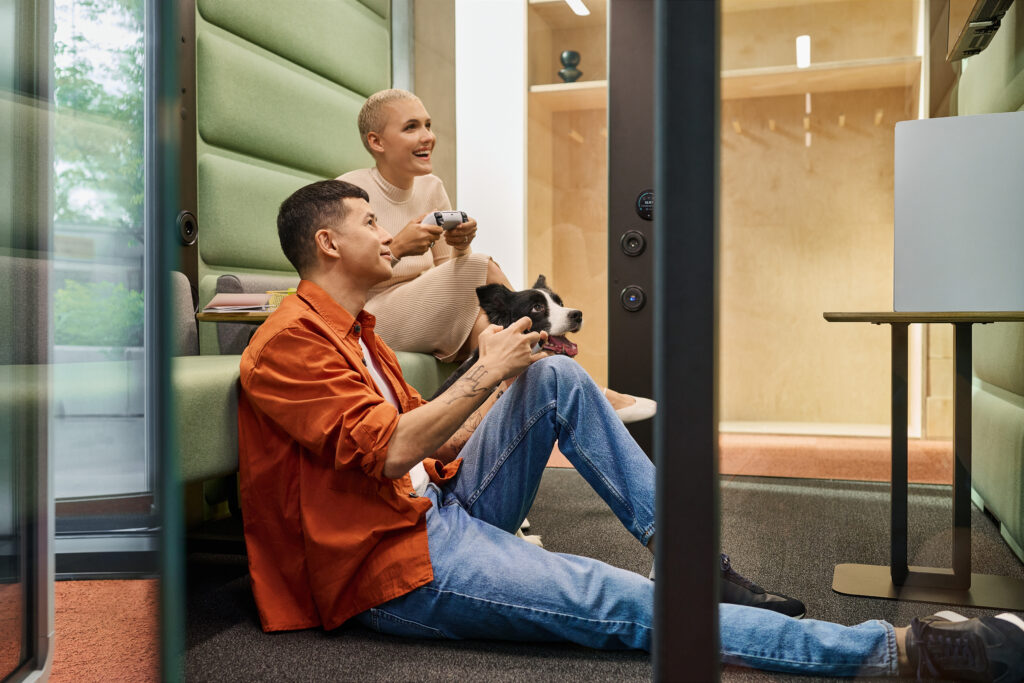
The most effective workplaces do not force people to choose between connection and concentration. They provide both.
Together, FMG and Haworth help clients create adaptable environments where employees can collaborate when collaboration adds value—and step into a quieter, more private setting when the work requires it.
Hushoffice acoustic pods make that balance possible without building a wall around every conversation.