


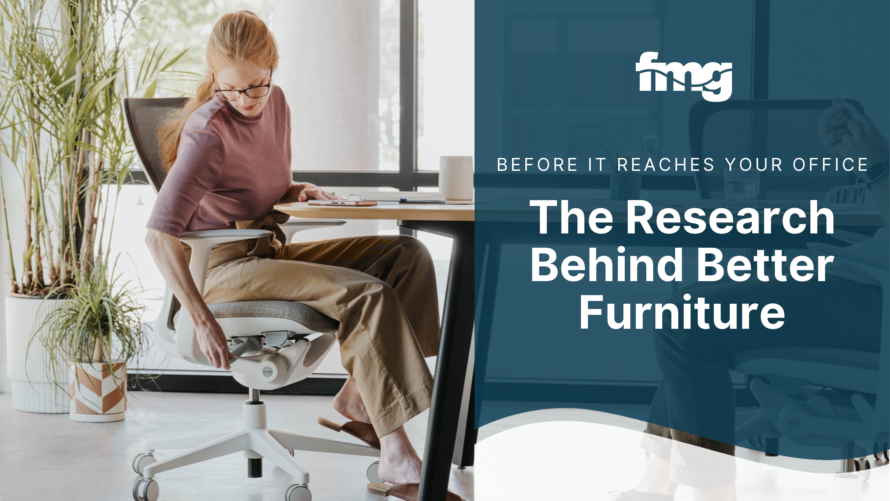
When selecting workplace furniture, we tend to focus on what we can see and experience: the shape of a chair, the finish on a table, or the arrangement of a workstation. Behind those features are questions, experiments, and decisions that began long before the product reached a showroom.
How do people move while working? Where does a chair need to provide support? What makes an adjustment easy to use? How can furniture help people shift between individual work and shared activities?
Understanding how manufacturers address those questions gives clients another way to evaluate their options. Haworth brings research, design, and engineering to that process. FMG helps clients connect the resulting solutions to their own people and work.
Start with the Workplace Need
Useful innovation begins with understanding a problem. Employees may need more freedom to change position, better support during concentrated work, or settings that accommodate activities their current office makes difficult.
Haworth’s workplace research explores how environments relate to human behavior, comfort, and performance. Its research on creativity, for example, considers the importance of both focused effort and restorative activities, along with opportunities to work independently and exchange ideas.
That broader understanding matters because a workplace supports many activities throughout the day. A product’s usefulness depends partly on how it fits into that larger experience.
FMG can help clients identify those needs before narrowing the furniture choices. Conversations about daily tasks, existing frustrations, and work habits provide a more useful starting point than selecting products from appearance alone.

Turn Insight into Design
Research helps identify what people need. Design and engineering explore how a product can respond.
A chair that supports movement must balance flexibility with stability. A workstation that allows position changes must also accommodate power, equipment, and the surrounding layout. Controls need to be accessible and understandable.
Haworth’s approach connects questions about people with decisions about products and spaces. The process brings practical purpose to innovation: a new idea becomes valuable when it addresses a meaningful need. Explore Haworth’s approach to innovation.
For clients, this offers a useful question to ask during selection: What was this feature designed to help someone do?
The answer can reveal whether a feature is relevant to their workplace, and what other choices are needed to make it useful.

Fern: From Sitting Research to a Different Chair Back
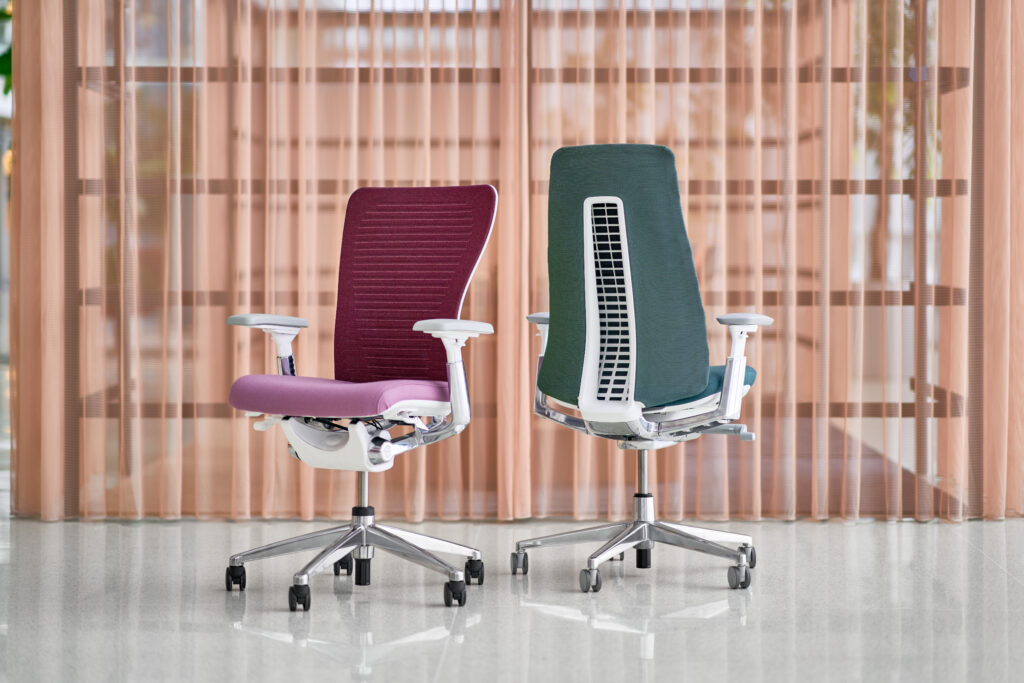
Haworth’s Fern chair illustrates how research can influence both a product’s internal construction and the experience of using it.
During development, Haworth explored posture, flexibility, and comfort, built functional prototypes, and tested them with customers. Feedback helped inform the chair that became Fern.
One important design decision involved placing the suspension structure toward the center of the back. This allowed more flexible edges and a back designed to respond as the user moves. The structure of a fern provided inspiration for the central support and branching elements. Read Haworth’s Fern design story.
The resulting chair shows how observation, customer input, and engineering can come together in a design decision that someone feels when they sit down.
FMG helps clients explore that experience alongside other seating options, considering how different users respond and which adjustments suit their work.

Zody: Responding to Changes in How People Work
Height-adjustable desks introduced new possibilities for changing position during the day. They also raised questions about how seating could support those transitions.
Haworth’s Zody II offers a Dual Posture option designed to support seated and perched positions at height-adjustable tables. Its adjustable pelvic and lumbar support provides another example of a feature developed around the user’s physical needs. Learn about Haworth’s seating research and Zody II.
For a client, the important step is understanding the application. FMG helps evaluate the chair configuration alongside the work surface, user needs, and intended activities. That helps connect the product’s capabilities to the way it will actually be used.
Test, Learn, and Refine
A design concept becomes more informative when people use it. Testing can reveal pressure points, awkward controls, or differences between what a designer intended and what a user experiences.
Haworth describes seating evaluations that include pressure mapping, posture observation, comfort surveys, and assessment of materials, mechanisms, and adjustment controls. These methods examine different aspects of the sitting experience and inform development decisions. See Haworth’s seating evaluation approach.
Client evaluation adds another perspective. People differ in size, preferences, tasks, and work habits. Trying a solution and understanding its adjustments can help a team make a more informed selection.
FMG helps clients connect those individual experiences with project requirements such as space, finishes, budget, and installation.
Bring the Research into Your Workplace
The benefit of research becomes tangible when it informs a decision that improves someone’s workday.
FMG can help clients compare solutions, understand the purpose of different features, and coordinate products into a coherent workplace. That includes considering how seating works with desks, how shared settings support team activities, and how employees will learn to use what is provided.
Haworth contributes the research and product development behind the options. FMG brings those options into the client’s planning conversation.
Together, that creates a stronger basis for furniture selection: an understanding of what a solution was designed to address, how it performs for the people using it, and where it fits within the workplace.
Connect with FMG to explore Haworth solutions and find the right fit for your people, your work, and your space.