


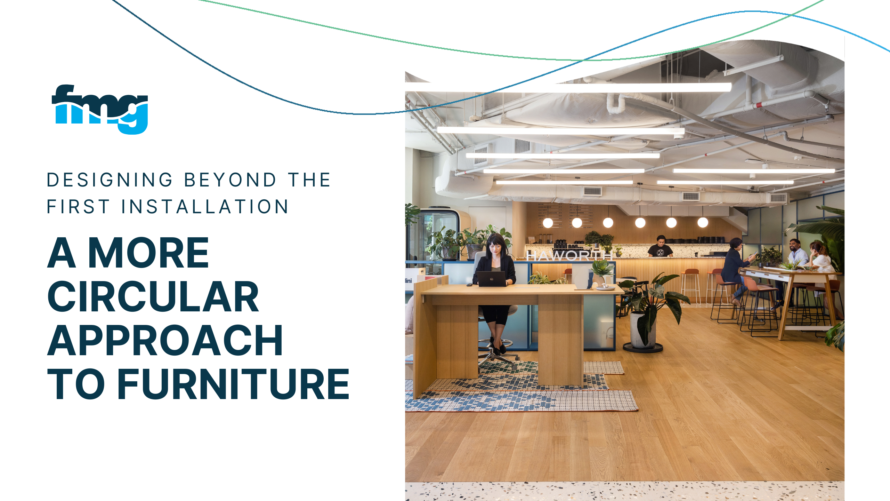
The environmental impact of a workplace does not end when construction is complete. Furniture, finishes, and other interior elements continue to shape that impact through renovations, reconfigurations, replacements, and end-of-life decisions.
According to Haworth’s research, interior elements can account for more than half of a building’s lifetime embodied carbon when initial construction and future improvements are considered. An estimated 8.5 million tons of office assets also enter U.S. landfills each year.
These numbers point to an important opportunity: We need to consider not only how furniture is made, but also how long it can remain useful.
Through our partnership with Haworth, Furniture Marketing Group helps clients make informed choices that support changing needs, reduce unnecessary replacement, and create more responsible options for the future.
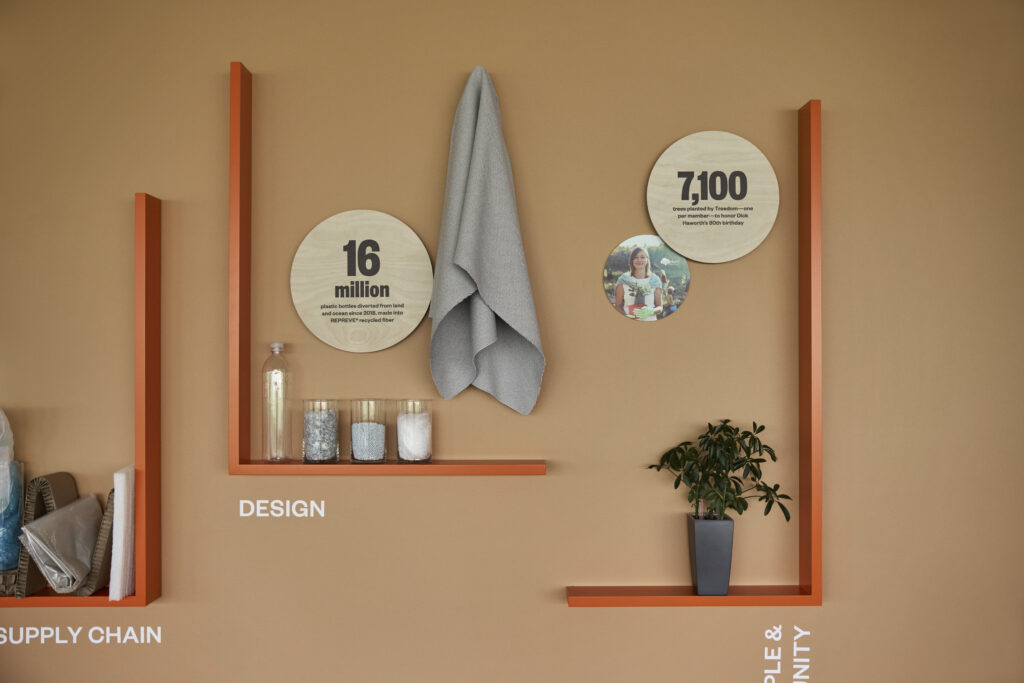
Moving Beyond a Linear Model
The traditional furniture life cycle follows a mostly linear path: extract raw materials, manufacture a product, use it, and eventually discard it.
Recycling improves upon that model, but it is not always the best first step. It can require significant energy, and some products are difficult to process because of mixed materials, adhesives, or chemicals.
A circular economy focuses instead on keeping products and materials in use at their highest value for as long as possible. In practice, that means prioritizing reuse, adaptation, repair, refurbishment, resale, and donation before recycling or disposal.
Haworth’s Three Principles of Circular Design
1. Use Sustainable Materials
Material selection affects human health, environmental impact, and what can happen to a product at the end of its useful life.
Haworth considers factors such as recycled content, renewability, carbon impact, chemical composition, and recyclability. Its approach includes excluding harmful substances, prioritizing more sustainable materials, and reducing packaging that is difficult to reuse or recycle.
Certifications and disclosures, including BIFMA LEVEL®, GREENGUARD, Cradle to Cradle Certified®, Declare labels, Environmental Product Declarations, and FSC® certification, can help project teams make informed comparisons.
2. Extend the Product’s Useful Life
One of the most effective ways to reduce furniture’s environmental impact is to keep it in use longer.
Haworth designs products around three important qualities:
- Flexibility: The ability to adapt as workplace requirements change.
- Upgradability: The ability to update components without replacing the entire product.
- Repairability: The ability to maintain and repair a product so it can continue performing as intended.
A product that can be reconfigured, refreshed, or repaired is less likely to become obsolete as an organization evolves.
3. Plan for a Responsible End of Life
Circular design considers a product’s eventual end of life before it is manufactured or specified.
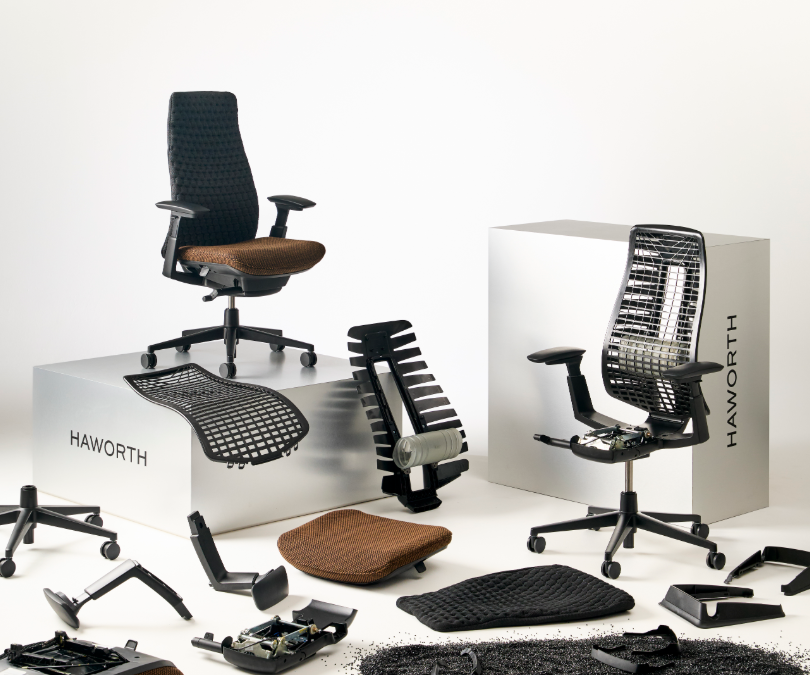
Designing for disassembly makes components easier to repair, reuse, or recycle. Circular services, including resale, donation, take-back, refurbishment, and responsible recycling, can help keep products and materials out of landfills.
As Metropolis noted in its examination of furniture circularity, continuing to use a product that still has service life is generally preferable to breaking it down and manufacturing something new.
Turning Principles into Project Decisions
Dealers, designers, facility teams, and clients all play a role in putting circular design into practice.
At FMG, we help clients ask important questions during planning and specification:
- Can the product adapt to future layouts?
- Can its components be repaired or upgraded?
- Are its materials and environmental impacts documented?
- Does it have a strong warranty and available replacement parts?
- Can it be disassembled efficiently?
- What reuse or recycling options may be available later?
As a Haworth dealer partner, FMG combines product knowledge, design support, project coordination, and long-term service to help clients consider durability, adaptability, material health, and long-term value, not simply appearance and initial cost.
Creating Workplaces with a Longer View
Circularity begins with better questions and more intentional choices.
By specifying durable products, selecting responsible materials, planning for flexibility, and considering future reuse from the beginning, organizations can reduce waste while creating workplaces that remain valuable through years of change.
Together, FMG and Haworth are helping clients move beyond the first installation, toward spaces, products, and decisions designed for a longer and more responsible life.